

Why lotus flower is so special?
The lotus has appeared in art, architecture, religious artifacts and literature for more than two thousand years. Carved out of stone in temples, painted on paper, wood and paper, casted in bronze, and woven into textiles, it became a visual symbol shared across Asia long before it became known and familiar in Europe.

AI generated supporting image
The lotus flower was always special and appeared as a magical bloom, it grows directly from the water, becoming a visible edge between two worlds: above and under. That's all makes Lotus Flower a symbol of awakening, that's why Buddha often presented in art seated on the big lotus flower.
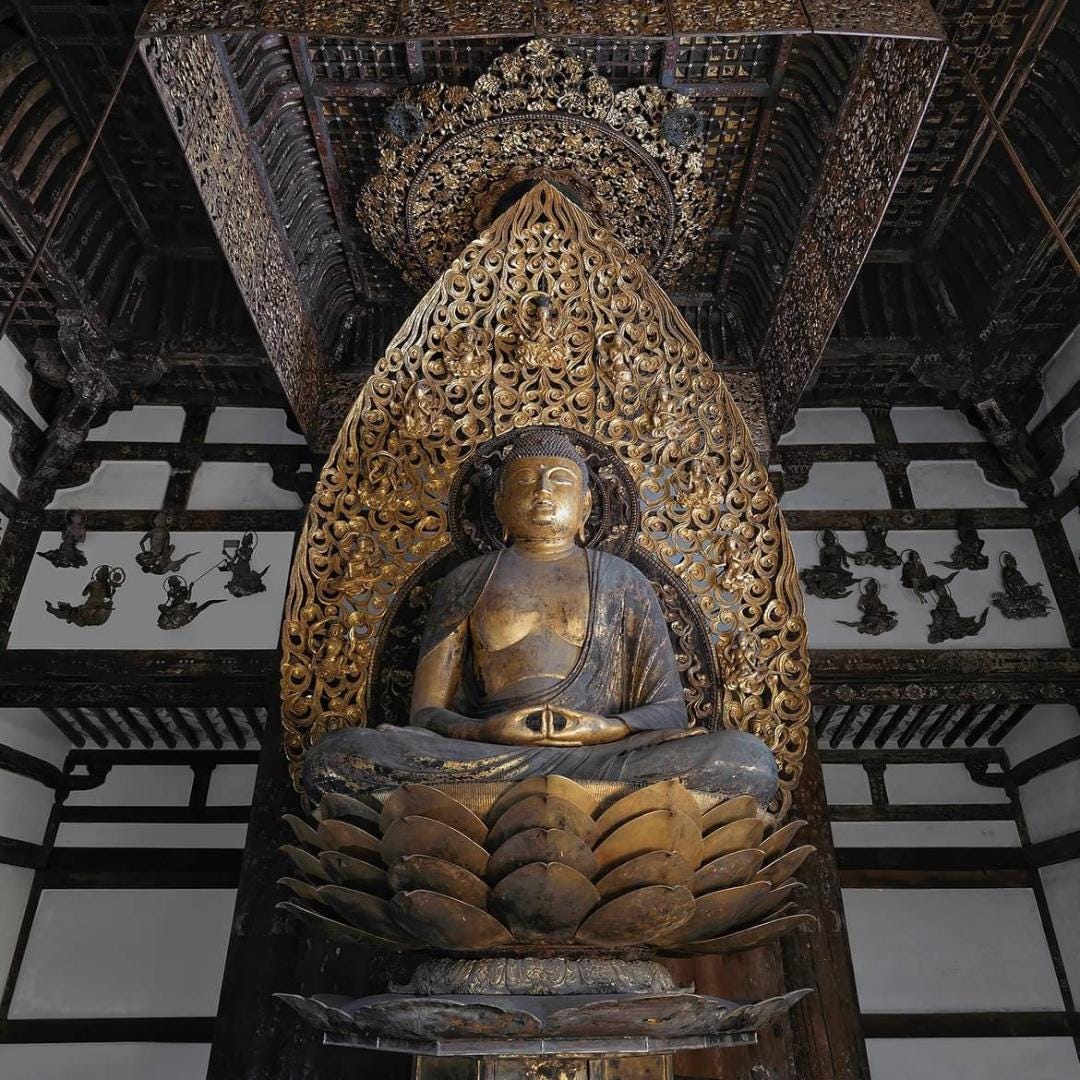
Amitabha Statue, Byodo-in Temple, Kyoto
The geometry of calm
The geometrical pattern of the flower feels like something beyond the nature itself. When the water is still, we see the perfect reflection of the bloom that shapes fractal. At the same time, unlike strict geometric forms, the lotus feels organic.
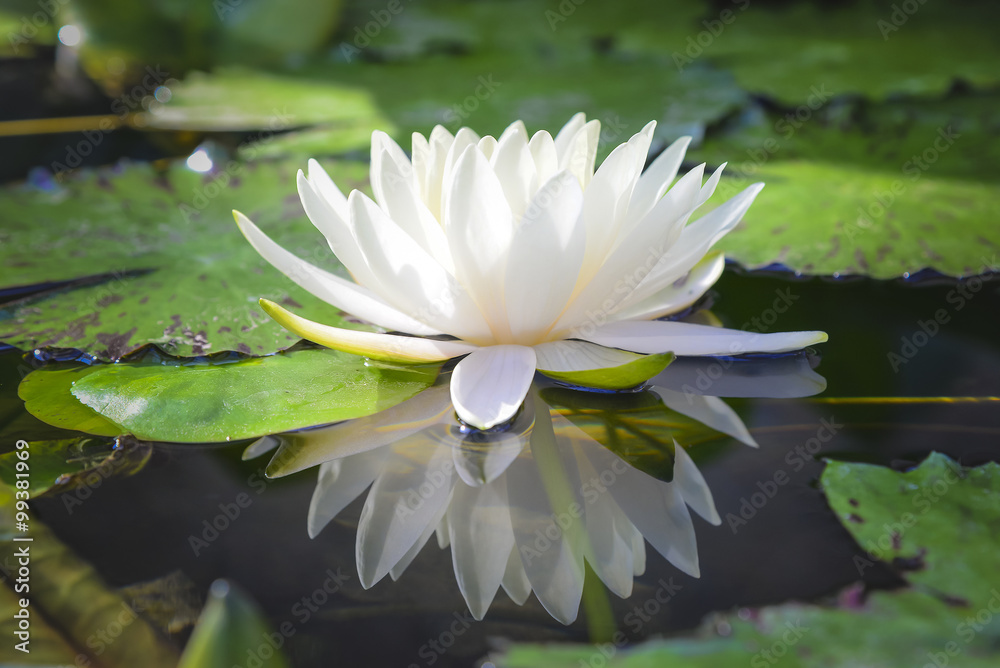
A living lotus flower is surprisingly complex. It may have twenty, thirty, or even more petals, but in art tradition it's simplified and presented to us usually with 8 petals only. Why 8? The answer is in history of crafts and ancient eastern traditions.
Eight Petals
In ancient Indian culture, Lotus with 8 petals represented balance—the four cardinal directions and the four that lie between them. Later, Buddhist art adopted the eight-petaled lotus as one of its main decorative patterns, and here is why. In Buddhist tradition, the eight-petaled lotus represents The Noble Eightfold Path—the core teaching of Buddhism. Its eight petals symbolize eight principles of living and practice: Right View, Right Intention, Right Speech, Right Action, Right Livelihood, Right Effort, Right Mindfulness, and Right Concentration.
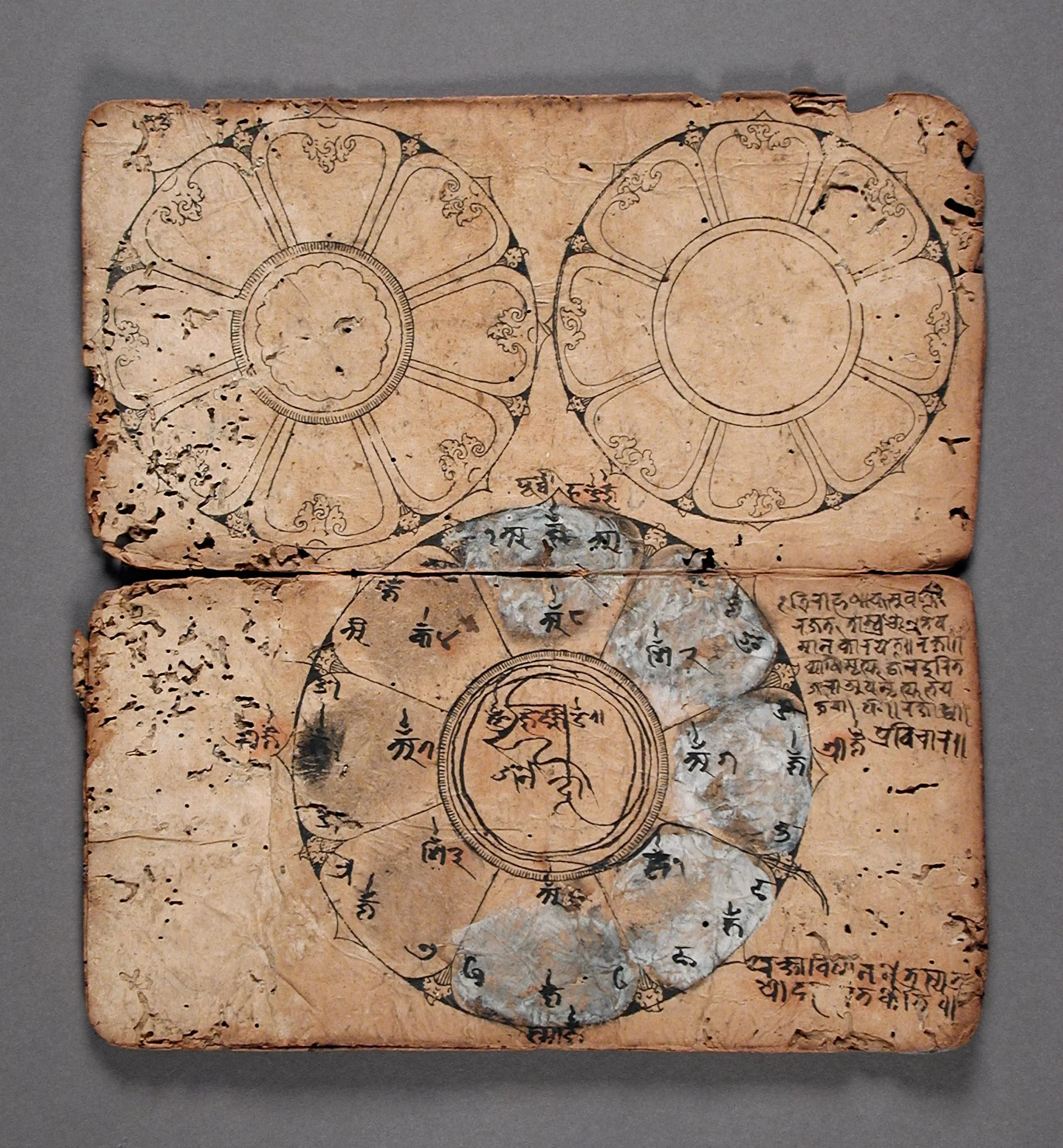
Book of Rituals and Mandalas, 1550-1600, Los Angeles County Museum of Art
Traveling monks and merchants introduced Buddhism and its visual codes to China starting in the 1st century, and it gradually integrated with Chinese culture over the following centuries. Later, in 6th century, when Buddhism arrives to Japan, it brought the Lotus symbol there as well. In Japan Lotus Symbol became more than a religious motif, but rooted deeply in Japanese art and design. Here lotus flower represents purity, renewal, and calmness.
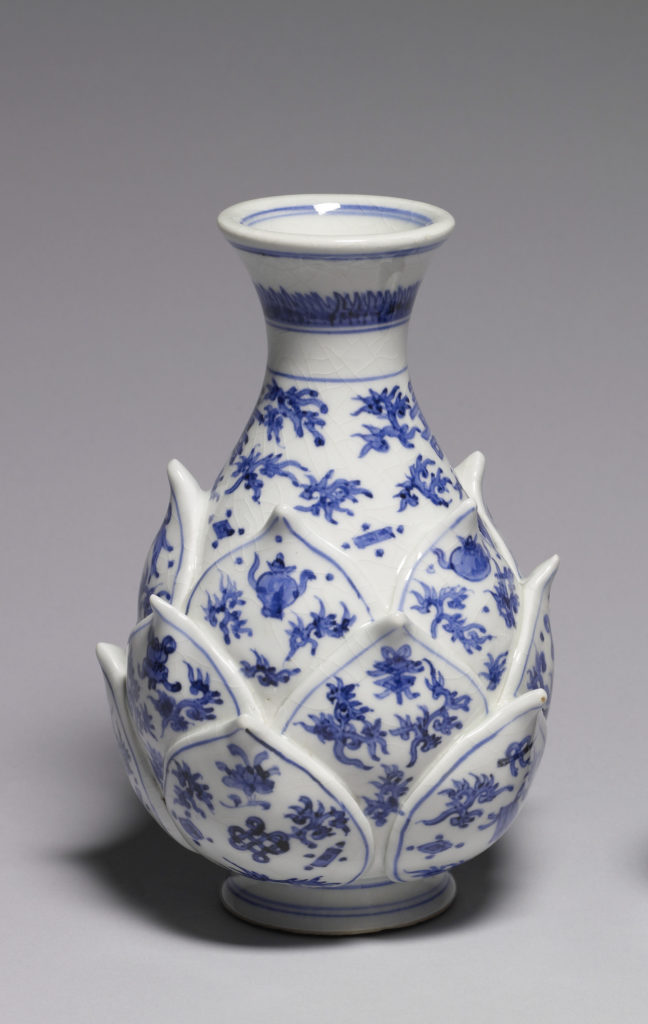
Vase with Lotus Blossom Base, 1825–55, late Edo period, Japan (Kyoto), porcelain with cobalt decoration under clear glaze. The Walters Art Museum.
The Lotus arrives in Europe
In 19th century trade between Europe and Asia expanded dramatically. New big trend was shaping quickly and took all over the Europe. Artists, designers and architects discovered new visual language and got inspired by asian arts and decorative tradition. We can follow this in interior and object design, in architecture, art, fashion, and graphics. That's what brought as Art Nouveau movement and ¨Water lilies¨ by Monet.

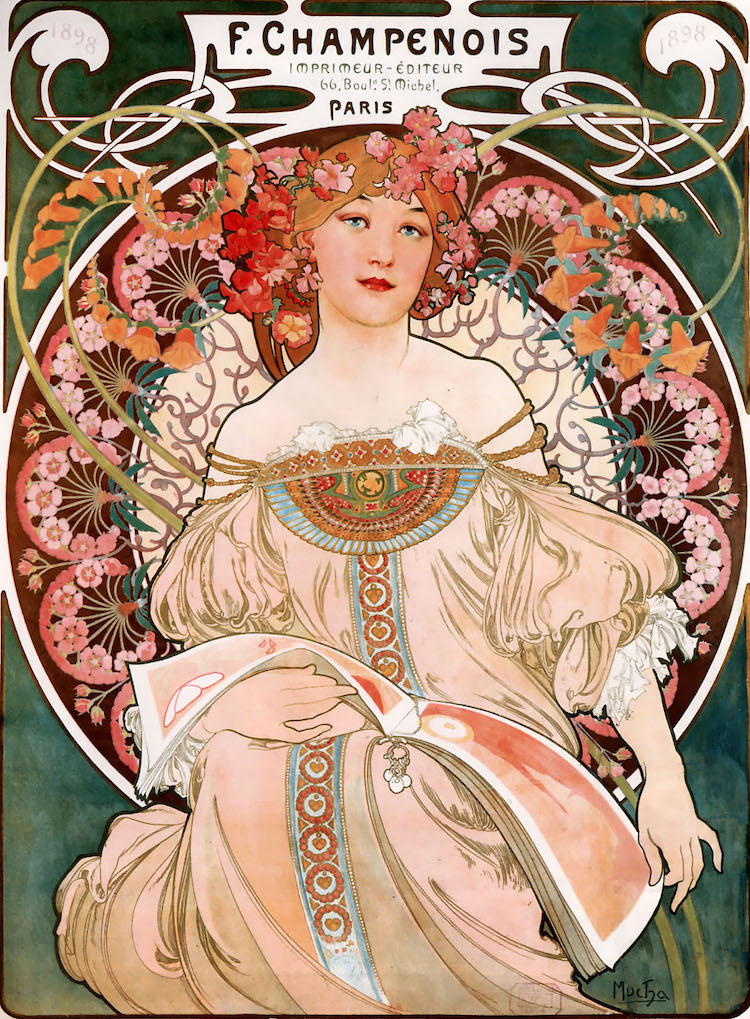
Alphonse Mucha, F. Champenois Imprimeur-Editeur, 1897